Small Monkey Breeds: A Complete Guide to the Tiny Primates of the World
Small monkey breeds are among the most fascinating creatures in the animal kingdom. Known for their compact size, agility, and playful behavior, these primates capture the interest of researchers, wildlife enthusiasts, and exotic pet lovers alike. Despite their small stature, they exhibit complex social behaviors, intelligence, and adaptability.
From dense tropical forests to urban-adjacent habitats, these monkeys have evolved to thrive in a variety of environments. Understanding small monkey breeds helps us appreciate biodiversity and the intricate roles these animals play in ecosystems, while also highlighting conservation needs and ethical considerations in human interactions.
List Of Tiny Monkey Breeds
- Pygmy Marmoset
- Goeldi’s Monkey
- Cotton-top Tamarin
- Squirrel Monkey
- Tamarins
- Marmosets
- Pygmy Capuchin
Pygmy Marmoset
The pygmy marmoset is widely recognized as the world’s smallest monkey, measuring only about 4 to 6 inches in body length. Native to the Amazon rainforest, these monkeys are highly social and live in small family groups.
Their diet primarily consists of tree sap, gum, and insects, which they skillfully extract using their sharp teeth. Pygmy marmosets are known for their high-pitched vocalizations, which help maintain group cohesion in dense forest habitats. Their tiny size, combined with remarkable agility, allows them to navigate fine branches effortlessly, making them exceptional climbers and foragers among small monkey breeds.
Goeldi’s Monkey
Goeldi’s monkey, also known as Callimico goeldii, inhabits the upper Amazon regions of Brazil, Peru, and Colombia. They are slightly larger than pygmy marmosets but still among the smallest monkey breeds. Goeldi’s monkeys have a distinctive dark coat and tufted ears.
They are nocturnal and crepuscular, them less visible than some other small monkeys. Their diet is diverse, including fruits, insects, and plant exudates. These monkeys live in small family groups and are known for their vocal communication and cooperative care of offspring. Conservation concerns include habitat loss due to deforestation, which threatens the fragile populations of the
Cotton-top Tamarin
Cotton-top tamarins are famous for their expressive white crest of hair that resembles a cotton tuft. Native to Colombia, they are small monkeys with an average body length of 7 to 9 inches. They live in groups typically consisting of 3 to 9 individuals and display cooperative breeding, where multiple members help care for infants.
Cotton-top tamarins are omnivorous, feeding on fruits, insects, and small vertebrates. Their social structures are complex, and they use vocalizations, facial expressions, and scent marking for communication. Habitat destruction and the pet trade pose major threats to this charismatic small monkey breed.
Squirrel Monkey
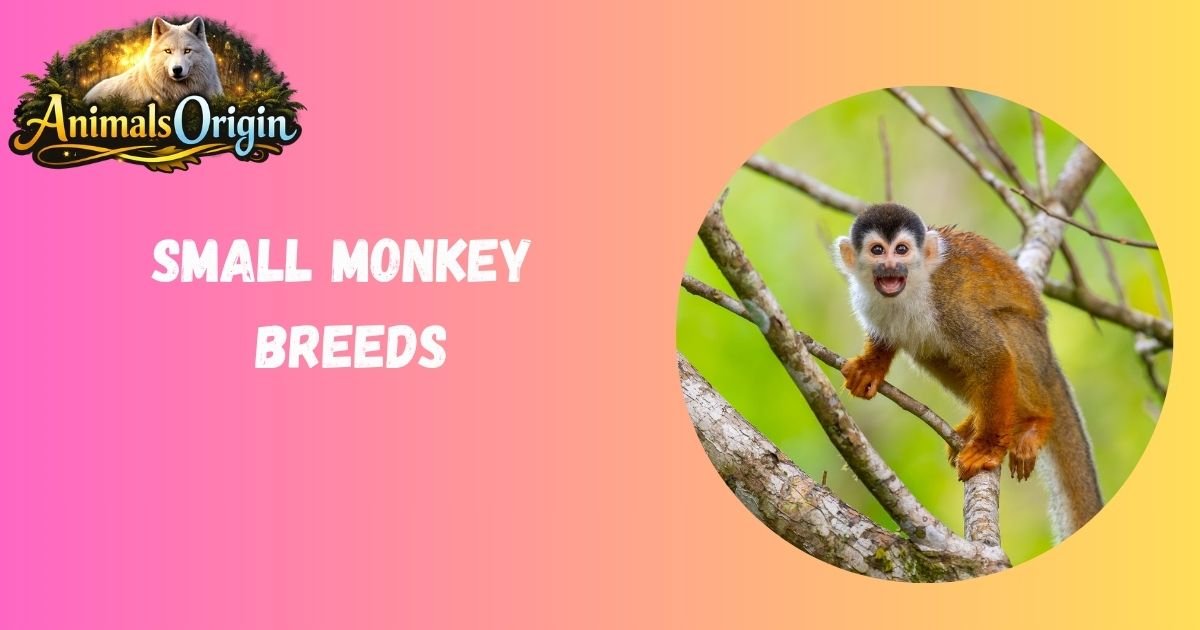
Squirrel monkeys are small, agile monkeys found in Central and South American tropical forests. They have slender bodies, short fur, and expressive faces that make them easily recognizable. Adult squirrel monkeys typically measure around 10 inches in body length, excluding the tail.
They are highly social, forming large troops that can include dozens of individuals. Their diet is varied, consisting of fruits, insects, flowers, and small vertebrates. Squirrel monkeys exhibit remarkable intelligence and agility, allowing them to forage efficiently in dense canopy habitats. Conservation efforts are ongoing to protect them from habitat fragmentation and hunting pressures.
Tamarins
Tamarins are a diverse group of small monkey breeds with over a dozen species, including golden lion tamarins and emperor tamarins. They are native to Central and South America and are known for their colorful coats and distinctive facial features.

Tamarins live in social family units and engage in cooperative breeding, where siblings and other group members help care for the young. Their diets are omnivorous, often including fruits, insects, nectar, and small animals. Many tamarin species face habitat loss, emphasizing the need for conservation programs to preserve these small primates.
Marmosets
Marmosets, including the common marmoset, are small monkeys native to Brazil and surrounding regions. They are known for their soft fur, claw-like nails, and expressive faces. Marmosets typically live in family groups and show cooperative behaviors, including shared care of offspring.
Their diet is highly specialized, focusing on tree sap, gum, and insects. Despite their tiny size, marmosets are energetic and highly vocal, using a range of calls to communicate with family members. Many species of marmosets are threatened by deforestation and human encroachment, making conservation a critical concern for these small monkey species.
Pygmy Capuchin
The pygmy capuchin, or Cebuella pygmaea, is one of the smallest members of the capuchin monkey family. Native to the Amazon Basin, these monkeys are slightly larger than pygmy marmosets but share similar agility and dexterity. They live in small social groups and use complex vocalizations to coordinate activities.
Their diet includes fruits, insects, nectar, and small vertebrates. Pygmy capuchins are excellent climbers and foragers, displaying intelligence and problem-solving skills. Conservation threats include deforestation and the exotic pet trade, which have contributed to declining populations in the wild.
Role In Ecosystem
Small monkey breeds play crucial roles in their ecosystems, particularly as seed dispersers and insect controllers. By feeding on fruits and excreting seeds in different areas, they promote forest regeneration and biodiversity. Their insect-eating habits also help regulate insect populations, contributing to the ecological balance.
These monkeys serve as prey for larger predators, forming a vital link in the food chain. Studying their behavior and ecological contributions provides insight into the health of tropical forests and highlights the importance of conserving small monkey breeds for both ecological and scientific purposes.
Conservation Challenges
Many small monkey breeds face serious threats due to deforestation, habitat fragmentation, and illegal wildlife trade. Rapid urban expansion and agricultural development have destroyed large areas of tropical forests, leaving small monkey populations isolated. Some species, like the cotton-top tamarin, are critically endangered and require intensive conservation efforts.
Wildlife reserves, breeding programs, and anti-poaching initiatives are essential to protect these tiny primates. Public education about the ecological importance of small monkey breeds also helps reduce the demand for exotic pets, ensuring that these fascinating animals can thrive in the wild for generations to come.
Read More: Animals with Long Legs: Masters of Height and Grace in the Wild
Ethical Considerations for Pets
While small monkeys, such as pygmy marmosets and tamarins, are sometimes kept as exotic pets, this raises serious ethical and welfare concerns. They have complex social, emotional, and environmental needs that are difficult to meet in captivity.
Inadequate care can lead to behavioral problems, poor health, and shortened lifespans. Legal restrictions in many countries prohibit keeping wild primates as pets due to conservation and ethical concerns. Observing these monkeys in their natural habitats or accredited sanctuaries is a better way to appreciate their behaviors without compromising their well-being.
Final Words
Small monkey breeds are remarkable for their size, intelligence, and social complexity. From pygmy marmosets to tamarins and squirrel monkeys, each species has unique adaptations that allow them to thrive in tropical forests. They play essential ecological roles while captivating humans with their charm and agility.
Many of these species are threatened by human activity, emphasizing the need for conservation, ethical observation, and habitat protection. By understanding and valuing small monkey breeds, we can help preserve biodiversity and ensure these tiny primates continue to enrich our world for generations to come.
FAQs
What is the Smallest Monkey Breed in the World?
The smallest monkey breed in the world is the pygmy marmoset. It measures only about 4 to 6 inches in body length and weighs around 100 grams. Despite its tiny size, it is highly active, social, and skilled at climbing trees in the Amazon rainforest.
Can Small Monkey Breeds be kept as Pets?
Small monkey breeds are not ideal pets because they require complex care, social interaction, and a natural environment to thrive. In many places, keeping them as pets is illegal due to ethical and conservation concerns. It is best to admire them in the wild or in protected sanctuaries.